IPA vs Lager vs Pilsner: Beer Styles Explained for Normal People
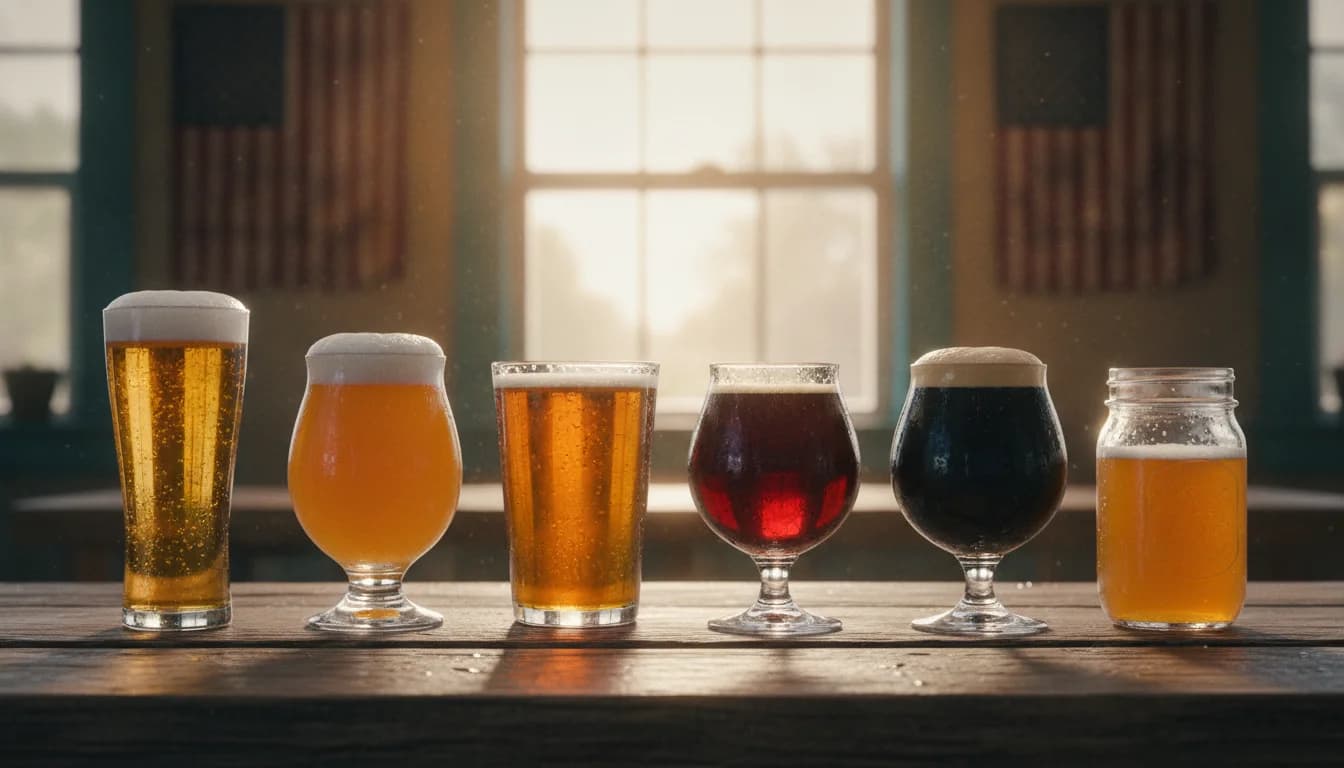
Every beer on earth is either a lager (fermented cold and slow, tastes clean and crisp) or an ale (fermented warm and fast, tastes fruitier and bolder) — and every style name on a tap list is just a variation on one of those two families. That's the whole secret. This guide walks the styles you'll actually encounter, what they taste like in plain English, and what to order when you're standing at the tap list pretending to deliberate.
The Two Families
Lagers ferment cold with bottom-acting yeast. The result is clean, crisp, and smooth — the yeast stays out of the way and lets malt and hops speak quietly. Almost every famous American macro beer is a lager.
Ales ferment warm with top-acting yeast that throws off fruity, spicy flavors. IPAs, wheat beers, stouts, and sours are all ales. More flavor variance, more personality, more ways to be weird.
Neither is "better." A perfect pilsner is as hard to brew as any hazy IPA — arguably harder, because there's nothing to hide behind.
The Lager Side
American Lager
Crisp, light, and cold — the beer of ballparks and boat days. Low bitterness, subtle grain sweetness, built for drinking in the sun. When people say "just a beer," this is what they mean. The best of the bunch live in our best light beers roundup.
Pilsner
A lager with the volume turned up: more hop bite, a snappy dry finish, and a floral, spicy aroma from noble hops. Czech pilsners run softer and rounder; German pilsners run drier and sharper. If American lager is a t-shirt, pilsner is a fitted one.
Mexican Lager
Corn in the grain bill makes it lighter and slightly sweet — which is why it takes a lime so well. The unofficial beer of beaches everywhere.
Amber / Vienna Lager
Toasty, bready, a little caramel. Still clean like all lagers, just warmer in flavor. The fall transition beer that works all year.
The Ale Side
Pale Ale
The gateway craft beer. Hoppy but balanced — citrus and pine over a sturdy malt base. If you're lager-loyal and IPA-curious, start here.
IPA (India Pale Ale)
Hops out front: bitterness, citrus, pine, tropical fruit, depending on the sub-style. West Coast IPAs are clear, dry, and bitter. Hazy (New England) IPAs are cloudy, soft, and juicy like orange juice with a kick. Session IPAs shrink the ABV to lake-day levels. Double/Imperial IPAs go the other direction — sip accordingly.
Wheat Beer
Soft, hazy, and smooth, often with banana-and-clove notes (German hefeweizen) or citrus (American wheat, Belgian wit). Summer's easiest crowd-pleaser — an orange slice is optional but traditional.
Stout & Porter
Dark, roasty, coffee-and-chocolate territory. Heavier in flavor but not always in alcohol — Guinness has fewer calories than most IPAs. Porters run slightly lighter and sweeter than stouts, and both are better at a bonfire than you'd expect.
Sour
Tart, bright, sometimes fruited to taste like sparkling lemonade. Modern fruited sours are the beer that converts people who "don't like beer." Approach fruit-heavy versions like hard seltzer's craft cousin.
What to Order When
- Beach or boat, all day: American lager, Mexican lager, or session IPA — see the best summer beers
- With BBQ: Amber lager or pale ale — the beer and BBQ pairing guide goes deep
- First round at a craft bar: Pilsner. It tells you instantly if the brewery is any good.
- Dessert or bonfire: Stout or porter
- For the friend who hates beer: Fruited sour or a citrus wheat
How to Read a Tap List Without Panic
Two numbers matter. ABV is strength — 4-5% is sessionable, 6-7% is a slow-down signal, 8%+ is a commitment. IBU is bitterness — under 20 is mild, 40-60 is IPA territory, 70+ is hop-forward on purpose. Style plus those two numbers tells you 90% of what's in the glass before you order.
FAQ
What's the actual difference between an IPA and a pale ale?
Degree, not kind. IPAs use more hops for more bitterness and aroma, and usually run 0.5-1.5% higher in ABV. A pale ale is an IPA with the volume at 6 instead of 9.
Is a pilsner a lager?
Yes — every pilsner is a lager, but not every lager is a pilsner. Pilsner is a specific lager style with more hop character and a drier, snappier finish than a standard American lager.
Why are hazy IPAs cloudy?
Suspended proteins from wheat and oats plus massive late-stage hop additions. The haze isn't dirt or a flaw — it carries the soft, juicy texture the style is famous for.
What beer style is best for a hot day?
Light lagers, Mexican lagers, pilsners, and session IPAs — anything crisp and under 5.5% ABV. High-alcohol, heavy styles fight you in the heat. Our summer beers roundup ranks the specifics.
What does "session" mean on a beer label?
Low enough ABV (usually under 5%) that you can have a few across a long afternoon — a session — without getting knocked sideways. It's a promise about pace, not flavor.
Are dark beers stronger than light beers?
No — color comes from roasted malt, not alcohol. Guinness Draught is 4.2% ABV, lighter than most hazy IPAs. Judge strength by the ABV number, never the shade.
Keep the Party Going
American Beer Brands: The Complete Guide to US Breweries
Every American beer brand worth knowing — the macro icons, the craft legends, who actually owns what, and the oldest brewery in the USA.
The 10 Best Non-Alcoholic Beers That Actually Taste Like Beer (2026)
The 10 best non-alcoholic beers of 2026 — NA IPAs, lagers, and wheats that taste like the real thing. Tested cold, outside, where it counts.
The 12 Best Light Beers for Summer 2026
The 12 best light beers for 2026 — sub-100-calorie options that actually have flavor, ranked for cookouts, beach days, and lake afternoons.
Newsletter
Join the Party
Beer picks, beach intel, and gear deals — delivered weekly.
No spam. Unsubscribe anytime.